

The Clubhouse Playbook
Activities that look like play
and work like practice.
Resources for families, schools, therapists, and everyone in between.
The Clubhouse Playbook
Working through things doesn't have to feel like a chore.
Activities we actually run at The Clubhouse in Phoenixville, written down so you can use them at a kitchen table, in a classroom, or in a session. Every one lists what it builds, what to do when a child gets stuck, and what the grown-up's job is. Free, nothing to sign up for.
The growth is in the little moments, not the big themed afternoons. Which means you already have most of what you need.Nicole Weirich, Founder
The plays
Every play, and what it's quietly building.
Children are expected to share, wait, lose, ask for help, and recover from mistakes — then handed almost nowhere to practice. Each play below tells you what it builds, what to do if they get stuck, where the skill turns up later, and what your job is. Usually your job is smaller than you'd think.
Make something
Messy, hands-on, and usually worth clearing the table for.
-
The Best Homemade Bubble Mix The one that actually works. Make it the night before. 10 min, then rest overnight · Ages 2 and up · Some mess Read the play
What you need
- 6 cups warm water
- 1/2 cup blue Dawn (the original blue one — it matters)
- 1/2 cup cornstarch
- 1 tablespoon baking powder, not baking soda
- 1 tablespoon glycerin or light corn syrup
- A wide shallow bin
- Wands: pipe cleaners, cookie cutters, a hula hoop
How we do it
- Stir the cornstarch into the warm water until it disappears. Go slow. Lumps ruin it.
- Add the baking powder and the glycerin. Stir gently.
- Pour the soap down the side of the bowl and fold it in. Do not whip it. Foam is the enemy.
- Let it sit at least an hour. Overnight is better. Skim the foam off the top before you use it.
- Pour a few inches into a shallow bin and hand over the wands.
Your jobMake the mix the night before, then go sit in a chair.
What's actually happeningBubbles are the cheapest patience lesson we own. The mix has to rest. The wand has to move slow. Whipping it around fast gets you nothing, and every kid works that out on their own inside of four minutes — no adult narrating it, no reminder. They tried something, it didn't work, they changed it. Your only job is to not jump in and fix it for them.
If they get stuck
Bubbles pop the second they formThe mix is too fresh. It needs to rest. This is the fix ninety percent of the time.All foam, no bubblesIt got stirred too hard. Skim the top and let it settle.Someone drinks itIt's soap and water. Offer a real drink, move on, don't make it a thing.Nothing is working outsideWind. Bubbles want still, humid air — early morning or evening, not midday.Where it shows up later
Waiting for something you cannot hurry — the doctor's office, a turn on the swing.
Make it bigger
- Bubble snakes: a sock rubber-banded over the cut end of a water bottle.
- Bubble prints: add liquid watercolor, blow with a straw until it mounds over the rim, press paper on top.
- Giant bubbles: two sticks and one long loop of cotton string, one short.
-
Turmeric Sun Prints Paint it yellow, let the sun do the work, then turn the whole thing red. 20 min, then 1–3 hours of sun · Ages 4 and up, adult on the alcohol · Messy Read the play
What you need
- 1 teaspoon ground turmeric
- 1/2 cup rubbing alcohol
- Watercolor or other heavy paper
- A foam brush
- Flat objects: leaves, keys, paper shapes, doilies, hands
- Spray bottle with 1 tablespoon baking soda in 1/2 cup water
How we do it
- Stir the turmeric into the alcohol. Let it sit ten minutes, then pour off the liquid and leave the grit behind.
- Paint the paper yellow. It dries fast.
- Lay the objects flat. Weigh the corners down with rocks.
- Put it in direct sun for one to three hours. The exposed yellow fades pale.
- Lift the objects off. That's the print.
- Mist it with the baking soda water. Every bit of turmeric still on the page turns deep red-orange.
Your jobSet a timer and go do something else together. Waiting is easier with company.
What's actually happeningTwo things are happening and both are worth saying out loud. Turmeric fades in UV light — that's the print. Turmeric is also a pH indicator, so a base turns it red — that's the reveal. But the real lesson is that you cannot rush the sun. Kids will ask if it's done about nine times. Set a timer, walk away, do something else entirely. Waiting for something you have no control over is a skill, and there are almost no places left where children get to practice it.
If they get stuck
The print is faintNot enough sun, or the paint went on too thin. Two coats and a longer wait.Wind keeps moving the objectsRocks on every corner, or lay a sheet of glass over the whole thing.Turmeric on everythingYes. Old clothes only. It does not come out of anything, ever.No sun for daysA UV flashlight works. Slower, but it works, and kids love it more.Where it shows up later
Anything slower than a child would like: bread rising, a seed sprouting, a letter arriving.
Make it bigger
- Have them cut their own stencils first. That's where the design thinking lives.
- Mist only half the page so both states sit side by side and they can see the chemistry.
- Same paint on a white cotton tote or a pillowcase.
-
Clay Beads Roll, poke, bake, string. Four steps and every one is a different skill. 30 min plus baking · Ages 4 and up · Some mess Read the play
What you need
- Polymer clay, or air-dry clay if you'd rather skip the oven
- Bamboo skewers or toothpicks
- A baking tray and parchment
- Cord or stretch elastic
- A butter knife
How we do it
- Warm the clay in their hands first. Cold clay cracks and frustrates people.
- Roll a snake and cut it into chunks. Fastest route to a set that matches.
- Roll each chunk into whatever shape they want. Balls, cubes, discs, hearts, blobs.
- Poke the hole all the way through with a skewer and wiggle it so it stays open.
- Bake at 275°F for 15 minutes per quarter inch of thickness. Adult only. Air-dry clay: 24 hours.
- Cool completely, then string.
Your jobMake your own lumpy bead. It gives them permission to make one.
What's actually happeningThe hole is the whole lesson. A kid makes a beautiful bead and forgets the hole, or puts it too close to the edge and it snaps after baking. You can warn them and they will still do it once. Let them. On the second batch they check without being asked. That is what learning from a consequence actually looks like, and here it costs nothing but one bead.
If they get stuck
Bead breaks at the holeToo close to the edge or too thin. Thicker walls next round.Clay is crumblyOld or cold. Work it longer, or a drop of clay softener.Colors go muddyHands. Wipe between colors and work light shades first.Wants to make fortySet the number before you start. Ten good beads beats forty rushed ones.Where it shows up later
Checking your own work before you hand it in.
Make it bigger
- Marbled beads: twist two colors together and stop before it blends.
- Letter stamps — names, words, a message for somebody specific.
- Everyone makes five, then the whole table trades.
-
Open Crafting with Recyclables A bin of clean trash and no instructions. The most-requested table we set out. 30–60 min · Ages 3 and up · Some mess Read the play
What you need
- Cereal boxes, paper tubes, egg cartons, jar lids, bottle caps, corks
- Masking tape and a glue stick
- Child scissors
- String or yarn
- One bin to hold all of it
How we set it out
- Put everything in one bin. Don't sort it.
- Set out tape and scissors beside it.
- Say nothing about what to make. That is the entire setup.
- Sit nearby and work on your own thing.
- When they show you something, ask what it does rather than what it is.
Your jobBuild your own thing at the same table. Do not give advice.
What's actually happeningThis is the purest version of what we do here. No model, no example, no right answer — which is exactly why some children freeze in front of it for the first ten minutes. The freeze is the work. Most kids get very few chances to make something nobody described to them first, and the ones who look stuck are usually the ones who need it most.
If they get stuck
I don't know what to makeDon't suggest an object. Hand them one piece and ask what it reminds them of.Everything falls apartTape is not glue. Show one joining trick, then step back and let it fail a few times.Copies another kid exactlyThat's fine, and it's how a lot of learning works. Don't name it.Finished in two minutesAsk what it does. That one question restarts the whole thing.Where it shows up later
Solving a problem when nobody has told you the steps.
Make it bigger
- Theme the bin — only round things, only things that were once food.
- Two kids, one build, one bin between them.
- Keep the best piece and add it back to the bin next time.
-
Painting Shells or Rocks Bring something home from the beach, then give it a second life. 20–40 min · Ages 3 and up · Some mess Read the play
What you need
- Shells, or smooth rocks
- Acrylic or tempera paint
- Brushes
- A paper plate for a palette
- Newspaper
How we set it out
- Wash and fully dry them. Paint will not stick to a damp shell.
- Newspaper down, four colours out, one brush each.
- Let them pick their own rock. It matters more than you'd think.
- Leave them somewhere flat to dry properly before anyone touches them.
Your jobPaint one badly on purpose and paint over it where they can see.
What's actually happeningPainting something curved is much harder than painting paper, and children notice that on their own without being told. But the real thing here is that a rock can always be repainted. Mistakes on a rock are not permanent, and saying that out loud once — this one can be fixed — is worth more than the painting.
If they get stuck
Paint slides offThe surface was damp, or the paint is too thin. Dry it properly and lay the paint on thick.Wants to do all sixty rocksSet out five. Bring more only when those five are finished.Every colour turns brownOne water cup per two children, and rinse between colours.It's ruinedPaint straight over it. This is the whole lesson — say it plainly and move on.Where it shows up later
Trying again on the same thing instead of throwing it out and starting over.
Make it bigger
- Story stones: one simple picture per rock, then use them to build a story.
- Kindness rocks to leave around the neighbourhood.
- Paint a matched set of shells as a group project.
-
Dolls and Stick Figures They Make Themselves A stick, some yarn, a scrap of fabric. Then two hours of play. 20–40 min · Ages 4 and up · Low mess Read the play
What you need
- Sticks, or wooden clothespins
- Yarn
- Fabric scraps
- Markers
- Pipe cleaners
- Glue or tape
How we set it out
- Set everything out and let them choose the body first.
- Everything else follows from that one choice.
- Don't correct proportions or suggest features.
- When it's done, ask who it is.
Your jobMake one too, and let them name yours.
What's actually happeningA doll a child made carries far more play than one bought for them, because they decided who it was before they finished making it. That's symbolic thinking — this stick stands for a person — and it is the same cognitive move sitting underneath reading, where a letter stands for a sound.
If they get stuck
It doesn't look like a personAsk who it is instead of what it looks like. The question changes the job.Can't tie the yarnPipe cleaners twist rather than tie. Far easier hands.Makes one and stopsAsk whether it has a family. That's usually four more.Wants it perfectMake one yourself, badly, and keep it. Model that rough is allowed.Where it shows up later
Understanding that one thing can stand for another — the foundation under reading.
Make it bigger
- Build a house out of a shoebox.
- Make a whole family, then a whole classroom.
- Put on a show with them behind the sofa.
-
Paper Mâché Slow, messy, and worth clearing the afternoon for. Two days, 30 min each · Ages 5 and up · Messy Read the play
What you need
- Newspaper torn into strips
- Flour and water — one part flour to two parts water
- A balloon or a cardboard form
- A bowl for the paste
- Paint, for tomorrow
How we set it out
- Tear all the paper first. That's a proper job in itself and children like doing it.
- Mix the paste until it's about the thickness of thin pancake batter.
- Squeeze each strip between two fingers before laying it down, or it will never dry.
- Two layers is plenty. Overlap them in different directions.
- Leave it overnight. Say that at the start, not at the end.
- Paint it tomorrow.
Your jobMix the paste, and put tomorrow on the calendar together.
What's actually happeningThis is the longest-horizon thing in the whole library. You cannot finish it today and there is no version where you can. Every other entry here hands a child something at the end of the session. This one asks them to come back tomorrow, when the excitement has worn off — and that is a genuinely different skill that most children get almost no practice at.
If they get stuck
Hates the textureA brush instead of fingers. Some children genuinely cannot do wet paste, and that is fine.Too thick, won't drySqueeze every strip between two fingers before it goes on.Wants to paint it nowIt has to dry. Tell them this at the beginning so it isn't a disappointment at the end.Gives up on layer twoTwo layers is enough for a bowl. Lower the target rather than lose the project.Where it shows up later
Coming back to finish something the next day, after the fun part is over.
Make it bigger
- Bowls over a balloon, masks over a paper plate, a piñata for a party.
- Paint it, then seal it with Mod Podge so it lasts.
- Build a form from cardboard and tape first, for something other than a sphere.
Handwork and fine motor
Repetitive, quiet, and regulating. The ones we reach for on a hard day.
-
Fuse Beads The pegboard is where a lot of kids find out they can sit still. 20–60 min · Ages 5 and up, 4 with a close adult · Low mess Read the play
What you need
- Fuse beads and pegboards
- Parchment or ironing paper
- An iron
- Tweezers for hands that fight the pincer grasp
How we do it
- Start with a small board. A big one is an invitation to quit.
- Build. Don't suggest, don't improve it, don't hover.
- Slide the finished board onto a hard flat surface without tipping it.
- Adult only: medium heat, no steam, parchment on top. Circle the iron ten to twenty seconds, then peek.
- Cool it flat under a book or it curls.
- Flip and press the back if you want it sturdy enough to actually keep.
Your jobYou do the ironing. That's it. That's the whole job.
What's actually happeningThis is sustained attention with the reward built in. There's no way to rush it and no way to do it wrong, so kids who normally bail at the first mistake will stay. Watch for the moment somebody knocks a board. That's the real lesson and it's a big one. Some kids rebuild. Some are finished for the day. Both are fine, and which one you get tells you a lot about where that kid is right now.
If they get stuck
A board gets bumpedIt will. Say 'that stinks' and then nothing else. Do not rush in to fix it.Beads won't fuseHeat's too low or you pulled off too early. Longer, not hotter.Melted flat, holes closedToo hot. Back the iron off and use more parchment.Wants a design they can't buildGraph paper first. Plan it, then build it.Where it shows up later
Staying with a long task at school instead of abandoning it at the first mistake.
Make it bigger
- Design on graph paper before touching a bead. Planning ahead is the actual skill.
- Keychains, magnets, ornaments, backpack charms — give the work somewhere to go.
- Two kids, one big board, split down the middle. Negotiation happens within about a minute.
-
Finger Knitting No needles, no cost, and it quiets a room faster than anything else we own. 15 minutes to learn, then forever · Ages 5 and up · No mess Read the play
What you need
- Yarn. Chunky is easier. That is the entire supply list.
How we do it
- Drape the tail across the palm and hold it down with the thumb.
- Weave over and under: behind the index, in front of the middle, behind the ring, around the pinky.
- Weave back the other direction. Now there are two loops on each finger.
- Lift the bottom loop over the top loop and off the end of the finger. Every finger.
- Weave across again and repeat. A rope grows out the back of the hand.
- To finish, cut the yarn, thread the tail through the last four loops and pull tight.
Your jobLearn it once so you can hand it over, then stop watching.
What's actually happeningRepetitive bilateral motion is regulating. That's not a nice thing to say about knitting, it's the actual mechanism, and it's why a kid who can't sit through a story will sit through this. We keep yarn in the zen den for exactly this reason. A child who is winding up can be handed yarn instead of a consequence, and most of the time that is the end of it.
If they get stuck
Too tight to lift the loops offLoosen up, spread the fingers, use thicker yarn.Loses the over-underSay it out loud with them for two rows. Then stop talking.The rope is unevenIt doesn't matter. Don't mention it.Wants it to be somethingBelt, bracelet, headband, cat toy, or coil it and stitch a coaster.Where it shows up later
Having something to do with your hands when your body needs to move but the room doesn't.
Make it bigger
- One very long group rope, hung across a room.
- Two colors held together as one strand.
- Move up to a knitting spool or a lap loom when the rope stops being enough.
-
Chunky Arm Knitting Same idea, bigger yarn, and a real blanket in an afternoon. 45–90 min · Ages 8 and up · No mess Read the play
What you need
- Super bulky yarn — roving, or size 6 to 7
- Three or four skeins for a lap blanket
- Two arms
How we do it
- Slip knot onto the right arm.
- Cast on by looping the yarn over the arm. Ten to fifteen loops for a lap blanket. Loose. Loose loops matter more than anything else on this page.
- First row: pull the working yarn through the first loop and transfer it to the other arm. Work down the row.
- Keep alternating arms. Each pass across is one row.
- Cast off: pull the second loop through the first, keep going, thread the tail through the last one.
Your jobMake one alongside them. Yours will have holes too.
What's actually happeningThis is one of the only crafts where a kid finishes something genuinely big in a single sitting. That matters more than it sounds like it should. A lot of children have quietly decided they are not a person who finishes things, and a blanket in ninety minutes argues with that better than any conversation you could have. Their arms will get tired. That is part of it. Nobody has ever pushed through to the end and been sorry.
If they get stuck
Loops too tight to slideStart over, loose. Catch this in the first row or you'll catch it in the last.Arms tired halfwaySlide the live loops onto a broom handle or a rolled towel and take a break.The blanket has holesNormal for this yarn at this scale. Call it the style, because it is.Runs out of yarn mid-rowSquare knot the new skein on and tuck the tails in at the end.Where it shows up later
Finishing the book report, the chore, the season of the sport.
Make it bigger
- Scarves and cowls take a single skein and half the time.
- Two kids, four arms, one blanket. Coordination or chaos and both are worth watching.
- Coil and hand-stitch bulky yarn into a basket.
-
Gimp Plastic lace, two stitches, and the summer camp skill that never left. 20 minutes to learn · Ages 7 and up · No mess Read the play
What you need
- Two strands of gimp, four to six feet each
- A keyring or a clip
- Scissors
How we do it
- Fold both strands in half over the keyring. Four working strands hanging down.
- Box stitch: lay strand one across the center, strand two over it, strand three over that, then thread strand four over and through the loop strand one made.
- Snug all four evenly. Evenly is the whole trick.
- Repeat, squaring off the same direction every round.
- Circle stitch is the same thing, rotating one direction instead of squaring. It spirals.
- Finish with a knot, or melt the ends — adult only, and briefly.
Your jobDo the first three rounds hand over hand, then physically walk away.
What's actually happeningGimp is sequencing plus error recovery, and the second half is the valuable part. Miss a strand and you don't find out for four rows, and then you have to unpick it. Kids hate this the first time. But it is a small, safe, low-stakes rehearsal of 'I made a mistake and now I have to go back,' and there are not many places a child gets to practice that when nothing is riding on the outcome.
If they get stuck
It's twisting instead of squaringThe four strands aren't being pulled evenly. Snug all four, every round.Lost the patternUnpick back to the last row that looks right. Fudging it forward never works.Frustration in the first three roundsDo those three hand over hand with them, then let go completely.Ran out of lengthThe braid eats about half. Start longer than seems reasonable.Where it shows up later
Going back and fixing an error instead of hiding it or starting over.
Make it bigger
- Zipper pulls, water bottle clips, backpack tags — anything with a place to hang.
- Four colors instead of two. The pattern becomes visible and kids get genuinely obsessed.
- Butterfly stitch and spirals once the box stitch stops being interesting.
-
Pipe Cleaners and Pony Beads Two dollars of supplies and the best fine-motor workout we own. 15–30 min · Ages 3 and up · No mess Read the play
What you need
- Pipe cleaners
- Pony beads
- A shallow tray or rimmed plate
How we set it out
- Bend one end of each pipe cleaner into a loop so the beads can't slide off.
- Put the beads in something shallow with a rim. Never a deep bowl.
- Hand it over and leave it alone.
- If you want the maths in it, start a two-colour pattern and stop halfway.
Your jobSet up the shallow tray, then go read your book.
What's actually happeningThe pincer grasp is the same grip used to hold a pencil, and it develops through use rather than instruction — you cannot teach it by telling. The bracelet is just the excuse to do it two hundred times. And the patterning is real mathematics: recognising and extending a pattern is what number sense is built on.
If they get stuck
Beads everywhereShallow tray with a rim, every single time. This is a setup problem, not a child problem.Can't get the bead onBigger beads, or hold the pipe cleaner steady and let them do the bead.Just dumps them outLet them dump for a while. Pouring and dumping is a stage, not a problem to solve.Ready for moreStart an AB pattern and stop mid-way. Most children finish it without being asked to.Where it shows up later
Buttons, zippers, pencil grip, and the early maths of noticing what comes next.
Make it bigger
- Bend finished ones into rings, crowns, glasses, or animals.
- Sort by colour first, then string.
- Make a pattern and hand it to someone else to copy.
-
Weaving with Yarn or Scrap Fabric Over, under, over, under. A rhythm that settles a whole room. 30–60 min · Ages 5 and up · No mess Read the play
What you need
- A rectangle of cardboard
- Scissors
- Yarn, or strips cut from an old t-shirt
- Tape
How we set it out
- Cut notches every half inch along the top and bottom edges of the cardboard.
- Wind yarn down and back between the notches to make the warp. Tape the tail.
- Hand it over with a long strip and one instruction: over, under.
- Say it out loud with them for two rows, then go quiet.
- Push the rows down with your fingers every few passes.
Your jobMake the loom, say over-under twice, then stop talking.
What's actually happeningOver-under is a two-beat rhythm, and rhythm regulates a body — the same mechanism that makes finger knitting work in the zen den. It's also visible progress, which matters a great deal for children who have quietly decided they are not people who finish things. You can see precisely how far you have come.
If they get stuck
Loses the over-underSay it aloud with them for two rows, then stop talking. Silence is the teaching.Pulls tight and the loom bendsLooser. Show them by doing one row loosely yourself rather than explaining it.Gaps and holesPush each row down snug with fingers before starting the next.Wants to stop halfwayCut it off the loom and call it done. A half weaving is a coaster.Where it shows up later
Following a repeating sequence and catching yourself when you lose your place.
Make it bigger
- Weave with fabric strips cut from old t-shirts.
- Weave straight onto a fence, a chair back, or a garden trellis.
- Two colours alternating every row.
Paper and pencil
Almost no setup. Good for waiting rooms, restaurants and rainy Tuesdays.
-
Color by Number, Made by Them Coloring one is the easy half. Making one is where the thinking lives. 20–40 min · Ages 5 and up · Low mess Read the play
What you need
- Paper
- A ruler, or not
- Four markers or crayons
- A pencil
- Somebody to trade with
How we do it
- Draw a simple picture with big closed shapes. Straight lines are far easier than curves.
- Pick four colors. Four. Six turns into a mess and they will not finish it.
- Make the key at the top: a swatch of each color with a number beside it.
- Write a number inside every single region.
- Trade with somebody else and color theirs.
- Older kids: instead of the number, write a problem whose answer is that number.
Your jobAsk them to make you one, and then actually colour it in.
What's actually happeningColoring one is a completion win — low risk, visible finish line, no way to fail, which is exactly what some kids need on a hard day. Making one is a different animal entirely. They have to hold two things at once: what the picture looks like, and whether another person can follow their code. That's audience awareness, and it's the same muscle underneath good writing. When a kid hands their sheet over and their friend can't figure it out, they learn more in ten seconds than a lesson would teach.
If they get stuck
Regions too small to colorThicker marker for the outlines. Fixes it instantly and permanently.Forgot to make a keyColor one region as a sample and let them reverse-engineer it.Ten colorsCap it at four before they start, not after.Won't tradeDon't push it. Coloring their own is still the win.Where it shows up later
Writing directions somebody else can actually follow. Explaining a game to a friend.
Make it bigger
- Math facts inside the regions instead of plain numbers.
- Sight words in the regions, keyed by vowel sound or word family.
- A group mural — one panel each, taped together at the end.
-
Mad Libs The only grammar lesson children have ever asked to do twice. 10 min · Ages 6 and up · No mess Read the play
What you need
- A short story with words blanked out
- A second person who has not read it
- A pen
How we do it
- One person holds the story. Nobody else looks at it.
- Ask for words by type only. Noun. Verb. Something you'd find in a fridge. A body part.
- Fill them in with no hints about what the sentence is.
- Read the whole thing out loud with total commitment. Delivery is most of it.
- Then have them write their own: write a story, cross out the fun words, label what each one was.
Your jobRead it out loud like you mean it. The delivery is genuinely your job.
What's actually happeningParts of speech get taught as a worksheet and forgotten by Thursday. Here a kid has to produce a noun on the spot with no sentence to lean on, which is a much harder ask, and they don't notice they're doing it. Writing their own is the bigger one — they have to decide which words carry the joke and which ones don't. That is revision, and for most kids it's the first time they've done it because they wanted to.
If they get stuck
Every answer is 'poop'Let it land once. It is funny once. Then ask for a category — an animal, something at the beach.Can't produce a noun coldGive three options and let them pick one. Take the ceiling off.Peeked at the storyHand them the pen and let them be the reader next round.It falls flatThe reading was too fast. Slow all the way down and commit to it.Where it shows up later
Choosing words on purpose — in a story, a text, an apology.
Make it bigger
- Record the read-aloud and play it back. They will want to hear it four times.
- Do one about your own day at dinner.
- Older kids: swap only adjectives and adverbs, and talk about how much the tone moved.
-
Coloring The most underrated thing on this list. Not filler. 10–40 min · Ages 2 and up · Low mess Read the play
What you need
- Paper, or printed pages
- Crayons, pencils, or markers — fewer than you think
- A flat surface and a chair that fits them
How we set it out
- Put out eight colors, not sixty-four. Choice paralysis is real at this age.
- Sit down and color something of your own.
- Don't narrate theirs. No 'ooh, nice blue.'
- Let them stop when they stop.
Your jobColour your own page. Say nothing at all about theirs.
What's actually happeningColoring is one of very few activities that asks for real effort with zero risk of failing. That is exactly why it works on hard days, after a meltdown, and in the twenty minutes before pickup. It's also where a lot of children first practice deciding to keep going when something has stopped being novel.
If they get stuck
Scribbles and moves onDevelopmentally fine for a young child. Offer a bigger sheet, not a smaller picture.I can't stay in the linesThicker outlines and a bigger picture. Then stop mentioning lines entirely.Wants you to draw it for themDraw beside them, never on their page.Bored in four minutesChange the tool, not the picture. Markers to pencils to crayons changes everything.Where it shows up later
Staying with something that isn't exciting anymore because you want to finish it.
Make it bigger
- Take turns adding to one page.
- Colour the same page twice with completely different palettes.
- Frame one and hang it where they'll see it.
-
Tracing The unglamorous one that quietly builds the hand. 10–20 min · Ages 3 and up · No mess Read the play
What you need
- Paper and a pencil
- Things with a good outline — cookie cutters, leaves, blocks, keys, their own hand
- Tape
How we set it out
- Set the objects and paper out together.
- Show them holding the object still with one hand while the other traces.
- That two-hand business is the entire point — don't skip past it.
- Let them choose what to trace. Don't assign objects.
Your jobTrace your own hand next to theirs.
What's actually happeningHolding one thing still while the other hand works is a genuine skill, and it's the same one sitting underneath cutting, ruler use, and eventually handwriting. Tracing gets a child those repetitions without any of it feeling like practice, which matters enormously for the kids who have already decided they're bad at writing.
If they get stuck
The object keeps slidingTape it down for the first few, then quietly untape it.Pencil grip is a fistA shorter pencil forces a better grip. Break a crayon in half.It doesn't look like itTrace the same object three times on one page. It improves and they can see it.Refuses outrightTrace their own hand. Nobody refuses that one.Where it shows up later
Handwriting, cutting, using a ruler, holding the bowl steady while you stir.
Make it bigger
- Trace, cut out, and build a collage from the shapes.
- Trace a whole body on butcher paper.
- Trace it once, then draw it freehand right beside it.
Games
Turn-taking, losing small, and thinking one move ahead.
-
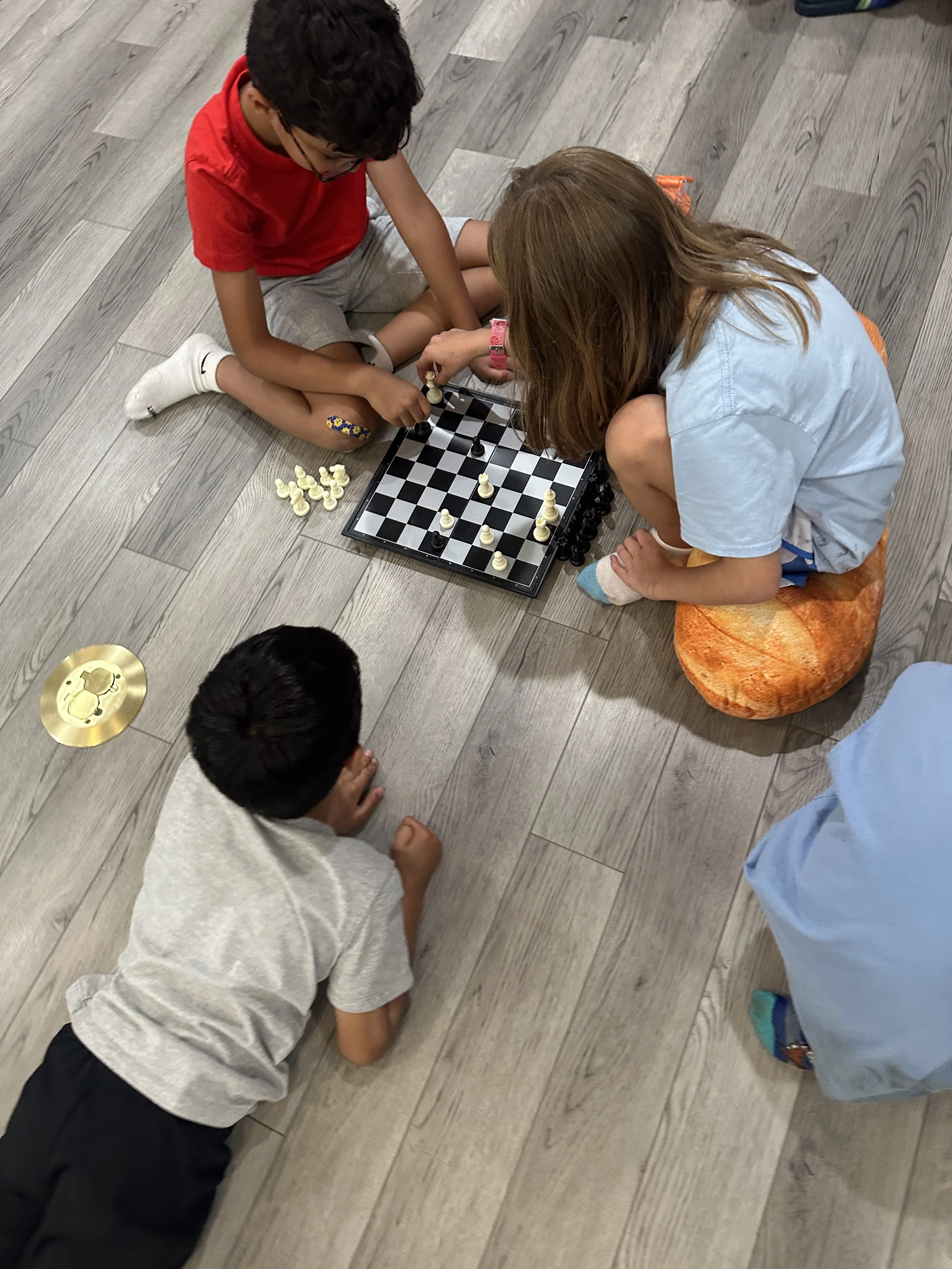
Chess Impulse control with a board. We don't teach openings. 15–45 min · Ages 6 and up · No mess Read the play
What you need
- A board and pieces. Any set. It does not need to be a nice one.
How we do it
- Do not start with a full game. Start with the pawn game — pawns only, first to the other side wins.
- Add one piece at a time. Rook, then bishop, then knight. Play a few rounds before adding the next.
- Teach the moves, not strategy. Pawn forward and captures diagonally. Rook straight. Bishop diagonal. Knight in an L. Queen anything. King one square.
- Once the full set is out, one question every single turn: what happens after you do that?
- Play short. Two quick games beat one long one, every time.
Your jobOne question a turn, then be quiet. Resist teaching.
What's actually happeningThe entire game lives in the pause between wanting to move and moving. That's it. That's the skill. A kid who slams a piece down and instantly says 'wait' is doing the work — the wanting to take it back is the brake arriving half a second late, and it arrives faster with reps. Chess is also a lot of losing. Small, frequent, survivable losing, which is the only kind anybody has ever learned from.
If they get stuck
Can't loseShorter games, more of them. And go back to the pawn game where losing is quick and cheap.Overwhelmed by the full boardTake pieces back off. There is no shame in it and it works.Wants to take a move backLet them, for the first month. Then stop, and tell them why you're stopping.BoredThey're ready for puzzles. Set up a two-move checkmate and let them find it.Where it shows up later
The pause between wanting to say something and saying it.
Make it bigger
- Team chess: two kids a side and they have to agree before a piece moves.
- Chess puzzles instead of whole games, especially for a kid who hates losing.
- Cover the board for one round of the pawn game. Chaos, and excellent for working memory.
-
Uno Turn-taking, flexible thinking, and getting targeted by your friends. 15 min · Ages 5 and up · No mess Read the play
What you need
- A deck. That's it.
How we do it
- Seven cards each. Flip one card to start the pile.
- Match the top card by color, by number, or by symbol. Or play a wild.
- Can't match, draw one. Play it if it works.
- Down to one card, say Uno. Miss it and draw two.
- First empty hand takes the round.
Your jobPlay to win. Kids always know when you're letting them.
What's actually happeningUno is a flexibility drill dressed up as a card game. A kid builds their whole hand around blue, somebody plays a wild, and the plan is gone. How they handle that tells you more than a conversation would. Then there's the draw four — the first time a child gets stacked on by a friend on purpose, they have to work out that it's the game and not a betrayal. That's a real distinction and most kids need to be walked through it once, out loud.
If they get stuck
Meltdown over a draw fourName it before it happens: 'in this game, people will get you. That's how it's played.' Say it at the start, not after.Hoards wilds foreverHouse rule — a wild can't be your last card.The game runs longPlay a set number of rounds instead of to five hundred points.Somebody always forgets to say UnoLet the table catch it. Don't be the enforcer.Where it shows up later
When the plan changes: a cancelled playdate, a substitute teacher, a different route home.
Make it bigger
- Turn stacking off entirely and watch the whole feel of the game change.
- Play open-handed with younger kids and coach the thinking out loud.
- Silent Uno. No talking, gestures only. Much harder than it sounds.
-
Go Fish Memory, asking directly, and hearing no about thirty times in ten minutes. 10 min · Ages 4 and up · No mess Read the play
What you need
- A standard deck, or a Go Fish deck
- Two to five players
How we do it
- Five cards each. The rest go face down in the pond.
- On your turn, ask one person for one rank. Do you have any sevens.
- You have to already be holding one of whatever you ask for.
- They hand over all of them and you go again. Otherwise, go fish.
- Four of a kind gets laid down. Most sets at the end wins.
Your jobAsk your questions out loud and clearly, so they can hear how it sounds.
What's actually happeningTwo things here and both are bigger than the game. First, working memory — who asked for what. Kids who start tracking it start winning, and they figure out entirely on their own that paying attention is the strategy. Second, and this is the real one: a child has to ask a direct question out loud to a specific person and get told no, over and over, in a setting where no is completely fine. For a shy kid that's worth more than the memory piece will ever be.
If they get stuck
Asks for a card they don't holdGentle reminder, not a penalty. It's a rule, not a foul.Shows everybody their handA fan holder, or stand a book up in front of them.Won't ask out loudSit beside them and ask together for a few turns. Then go quiet and let them.Loses interest fastShorter game. Cut the deck down to six ranks.Where it shows up later
Asking a teacher for help. Asking to join a game at recess.
Make it bigger
- Go Fish with sight words or math facts on index cards instead of ranks.
- Play one round open-handed as pure memory training.
- Add a rule: you have to say the person's name and look at them when you ask.
-
The Card Game Shelf Five games, one deck, and a whole lot of small wins and small losses. 5–20 min each · Ages 4 and up · No mess Read the play
What you need
- One standard deck of cards.
- For Spoons: spoons, one fewer than the number of players.
How we do it
- War — split the deck, both flip, high card takes the pile. Ties mean war. Zero skill, all endurance, perfect for the youngest kid in the room.
- Slapjack — flip in turn, slap the jacks, fastest hand takes the pile. Pure impulse control and the failures are funny instead of costly.
- Crazy Eights — match suit or rank, eights are wild. Uno's grandparent and much easier to modify.
- Spoons — collect four of a kind, then grab. One fewer spoon than players. Loud. Play it on the turf.
- Memory — pairs face down, flip two at a time. Straight working memory, and small kids routinely beat adults at it.
Your jobLose a few, and say something true about how losing feels.
What's actually happeningThis is the part of the library that does the most work for the least setup. Card games give kids many short rounds, which means many small wins and many small losses in one sitting, and that volume is the entire point. A kid who loses one long board game learns almost nothing about losing. A kid who loses six hands of War in twenty minutes and is still sitting there playing has actually built something.
If they get stuck
Slapjack gets roughHands flat on the table between flips. Slap the card, not the hand.War never endsSet a timer. Most cards when it goes off takes it.Spoons breaks somethingPlastic spoons, and play it on the floor.One kid wins everythingChange games. Don't handicap them in front of everybody.Where it shows up later
Losing the game at recess and staying in the game anyway.
Make it bigger
- Teach one new game a week and keep a running list of what they know.
- Let a kid teach a game to somebody else. Teaching it is the real mastery check.
- Build a house deck: index cards, their own game, their own rules, and you have to play by them.
No plays match that yet. Clear the filters to see them all.
Prefer it on paper?
A printable edition — the recipes, the steps, and what to do when it goes sideways.
Download the PDF
Questions parents ask
Straight answers.
What is The Clubhouse Playbook?+
The Clubhouse Playbook is a free library of activities used at The Clubhouse Phoenixville, a kids enrichment space in Chester County, Pennsylvania. Each play lists the materials, the steps, the skill it builds, what to do if a child gets stuck, and where that skill shows up in everyday life. It was written by Nicole Weirich, a bilingual special educator with an M.S. in School Psychology.
Who is the Playbook for?+
Families, teachers, therapists, aides, sitters, grandparents, and anyone else who spends time with children. The plays work at a kitchen table, in a classroom, in a waiting room, or in a session. Each one names the skill it targets and how to scaffold it, so a professional can slot it into existing goals and a parent can just use it on a Tuesday.
What is the best homemade bubble solution recipe?+
Mix six cups of warm water, half a cup of blue Dawn dish soap, half a cup of cornstarch, one tablespoon of baking powder, and one tablespoon of glycerin or light corn syrup. Stir gently and never whip it, because foam ruins the mix. Let it rest at least an hour, and overnight is better. Skim the foam off the top before using.
How do I help a child who melts down when they lose a game?+
Play short games and play many of them. A child who loses one long board game learns almost nothing about losing, but a child who loses six quick hands of War in twenty minutes and is still playing has built real tolerance. Card games work because the losses are small, frequent, and survivable. Name it before you start: in this game, people will get you.
What activities help a child who struggles with transitions?+
Repetitive handwork helps, because rhythmic bilateral motion is regulating. Finger knitting, weaving, and stringing pony beads all give a child something to do with their hands while their body settles. Keep the materials somewhere they can reach without asking, so the child can choose it before they escalate rather than after.
What can I do with kids at home with no supplies?+
Tracing needs only paper and a pencil. Coloring needs eight crayons, not sixty-four. Go Fish and War need one deck of cards. Open crafting needs a week of clean recycling and a roll of masking tape. Several plays cost nothing beyond what is already in most houses and most classrooms.
Do I have to buy anything or sign up to use the Playbook?+
No. The Playbook is free, there is no email signup, and there is nothing to buy. The printable version is also free to download, and schools and therapists are welcome to use and copy it. If you would like the version where we run it with your child, The Clubhouse offers school closure days, birthday parties, camps and team bonding sessions in Phoenixville.
When you want company
The version where we run it with you.
Same thinking, small groups, screen-free, led by Clubhouse educators in Phoenixville — minutes from King of Prussia, Valley Forge, Collegeville and Malvern.
- School Closure DaysForty dates across the Phoenixville, Tredyffrin-Easttown and Great Valley calendars.
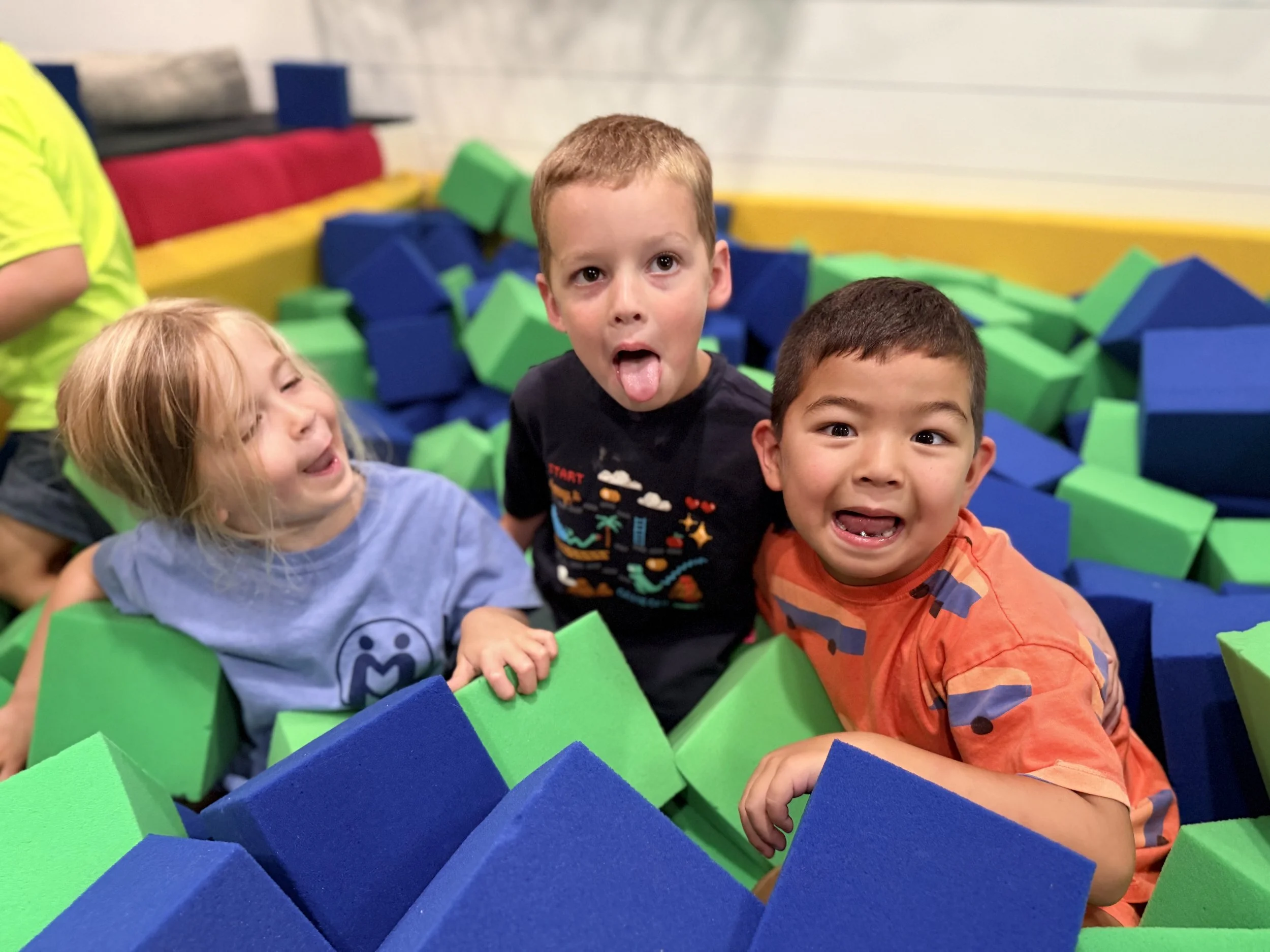
- Birthday PartiesPrivate space, a dedicated host, foam pit and turf. You bring the cake.
- Summer CampThemed weeks, small groups, screen-free.
- Team BondingOff the Field sessions for sports teams and groups, on the turf and in the creative rooms.
Publications and press

Best of the Main Line 2026 · Main Line Today LOVE Award 2026 · Main Line Parent Shadow Her · 2026 Graduate
- Making Connections at The Clubhouse Reading Eagle · April 2026
- The Clubhouse Redefines Child Development Vista.Today · February 2026
- Builds Friendships, Social Skills and Resilience Savvy Main Line · September 2025
- Fills Gap Needed to Support Kids, Families The Mercury · July 2025
What families say
5.0 everywhere people leave reviews.
75 five-star reviews on Google. 38 more on the Main Line Parent directory.
★★★★★Workshop activities and providers are selected with such care and understanding of our community. As a special education teacher, I can tell there was a lot of care and consideration put into the design of the classes. They are intentional, with the perfect balance of freedom and structure.
Bianca D. · Main Line Parent
★★★★★This isn't just another children's gym or play space. It is clear the Clubhouse is designed by professionals who understand childhood development and who have a mission to provide meaningful opportunities for children, and caregivers, to be themselves and to build real relationships with one another.
Regina · Main Line Parent
★★★★★There's a great balance of structure and choice and every activity provides opportunity for social and emotional growth. I would highly recommend The Clubhouse to any family seeking a professional, nurturing, and child-centered approach to social and emotional development.
Kelley S. · Main Line Parent
★★★★★As a mom of three (10, 7, and 3), finding a place that feels calm, creative, and actually enjoyable is a rare win. You can connect with friends without yelling over noise or juggling chaos. It's the kind of place you walk into and think, “This is what we've been missing.”
Lauren L. · Google
★★★★★The Clubhouse has saved me on multiple days when school has been closed or my kids have an early release. Not only do I trust them, but my kids look forward to going and love it there. Nicole immediately makes you feel at ease.
Sarah M. · Google
★★★★★Nicole and her team took charge of the flow and logistics, which left us open and present to enjoy the celebration. Several parents left saying “I got to sit and actually have an adult conversation.” My daughter went to bed with a huge smile saying, “That was so much fun!”
Kristen S. · Google
★★★★★My kids were being a little shy at first and immediately opened up once the activities started. They didn't want to leave and told me they can't wait to go back. It's nice to have a non-screen place where my kids can have fun and learn important life skills.
Brittany G. · Google